



The sun chews at his fur. White, meant for ice and glare, turns into a curse against the blistering desert sand. He lumbers forward… Paws sink in dunes that shift like the broken promises he’s come to expect. Each step is a negotiation within this alien landscape.
No ice to brace against, no cold to numb the skin, no silence or the calm of snow. Instead, heat shimmers on the horizon like a cruel mirage while voices of unseen insects buzz in his ears. A constant, needling hum. He stops, nose raised. This air offers nothing he understands.
No seal, no salt, no memory of frozen sea. Only grit fills his lungs, scouring from the inside, his instincts written for another time and place. In the frozen north he is apex, a ruler carved from ice and hunger, but here in the desert every step writes his defeat, a slow death delivered by a land that will not recognize his worth.
Autistic clinician and author Daniel Wendler presents the metaphor of the polar bear in his public speaking engagements. He calls this the Polar Bear Predicament.
In the Arctic, the polar bear stands at the very peak of the food chain. Encountering one on its own ground leaves little chance of escape. Yet place this same creature in a desert, far from ice and sea, and its strength counts for little. It will falter, unable to survive without assistance. When working with people who are like polar bears, powerful in the right setting but misplaced in another, we need to ask: what supports will help them flourish when the world around them does not fit?

Neurodivergent individuals aren’t looking for sympathy or lowered expectations. They’re looking for opportunities to demonstrate what they can do. When workplaces are designed to be inclusive, people with diverse ways of thinking and being are able to flourish. By recognizing and leveraging their unique abilities, teams gain an edge: stronger performance, greater creativity, and a healthier workplace culture.
It’s been well established that cognitively diverse teams solve problems faster than non-diverse ones. The key is creating a psychologically safe environment in which team members feel comfortable expressing different ideas and modes of thinking.
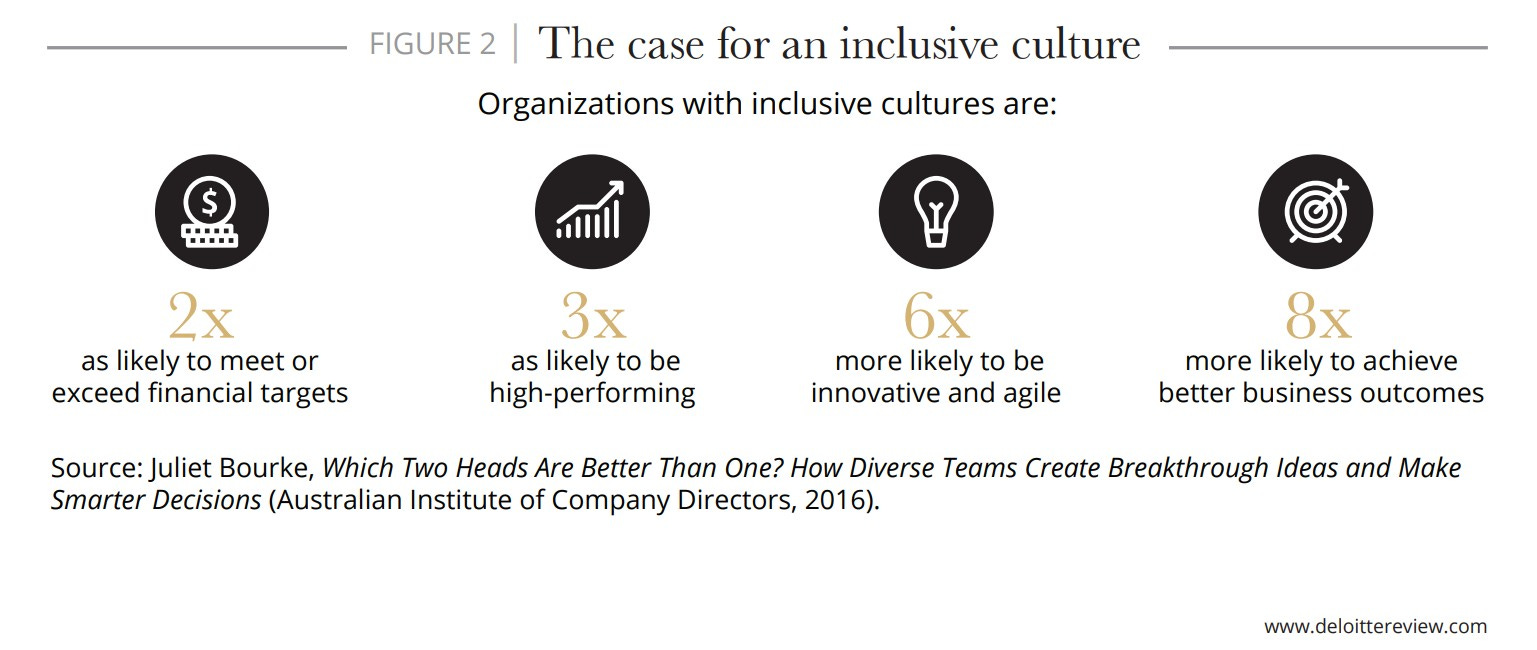
Decades of research show how neurodivergent people bring exceptional value to workplaces. In The Inclusivity and Inclusion Revolution, Deloitte research shows how diversity without inclusion is simply not enough.
Diversity, while valuable on its own, only truly yields better business outcomes when paired with a strong culture of inclusion. Deloitte’s research highlights a foundational formula—diversity plus inclusion leads to superior results. Put simply, the full benefits of a diverse workforce are diminished without an inclusive environment in which all people feel they belong and can contribute. Creating a truly diverse workplace requires ensuring a level playing field for all talent, and many organizations still need to work toward this goal.
The United Nations estimates better autism inclusion could add billions in productivity gains across economies. This was reiterated by the London School of Economics in 2014, which argued that doubling the employment rate for autistic adults could generate potential societal savings of $900 million to $1.5 billion annually in the UK alone. These projections, however, remain largely ignored.
Despite our proven strengths, autistic people remain one of the most underemployed groups worldwide. In Canada, only 33 percent of autistic adults are employed, compared to nearly 80 percent of non-disabled adults. In the U.S., the CDC reports the employment rate for autistic adults at around 29 percent, making autism the lowest employment rate among all disability categories. These statistics have generally stayed the same as the years progress. The gap between potential and opportunity underscores a massive economic and social loss.
For those who are employed, new research from Understood states 50 percent of neurodiverse employees won’t talk about their neurodivergence for fear of being stigmatized or mistreated in the workplace. This due to a number of factors, many of which can be rooted in unconscious biases.
Six Ways to Support the Polar Bears in Your Workplace

1. Examine your assumptions
Neurodiversity isn’t a single story. While autism is often the most recognized, it also includes ADHD, dyslexia, dyspraxia, Tourette’s, brain injuries, and sometimes mental health conditions. Recognizing the full spectrum helps avoid stereotypes.
Try Harvard’s Project Implicit Bias Tests to uncover hidden assumptions.
2. Offer flexibility
Not every polar bear works the same way. Some thrive with structure, others with freedom. Flexibility in scheduling, communication styles, or task organization can open space for better performance.
Explore the Job Accommodation Network (JAN) for ideas on accommodations.
3. Communicate with clarity
Unclear directions can create anxiety. Think of clarity as kindness — people do better when expectations, timelines, and goals are spelled out.
Practice with a Plain Language Checklist to make your communication sharper.
4. Rethink your workspace design
Open offices aren’t always inclusive. Bright lights, constant chatter, or background noise can overwhelm the senses. A small change like noise-reducing headphones or softer lighting can make a big difference.
Try using the an Accommodations Checklist for autistic employees.
5. Define what success looks like
Don’t just assign a task. Describe what the finished product should look like. Giving context helps employees see how their contribution fits into the larger picture.
Use the SMART Goals Framework to set clear, shared outcomes.
6. Remember — no two polar bears are alike
Knowing one neurodivergent colleague doesn’t mean you know them all. There’s as much variation among neurodivergent people as there is among anyone else. Stay curious, keep listening, and avoid assumptions.
The Neurodiversity Hub has useful resources for employers.
Employers have the opportunity to participate in this community of practice and gain access to a set of resources designed to support them in their journey toward greater awareness and understanding . Through active engagement, they can build the knowledge and capacity needed to create more accommodating work environments and foster a truly inclusive workforce which can maximize growth and potential.
This article was adapted from a neurodivergent advocacy and employee network in the Ontario Public Service which hosted a webinar led by autistic clinician Daniel Wendler.